
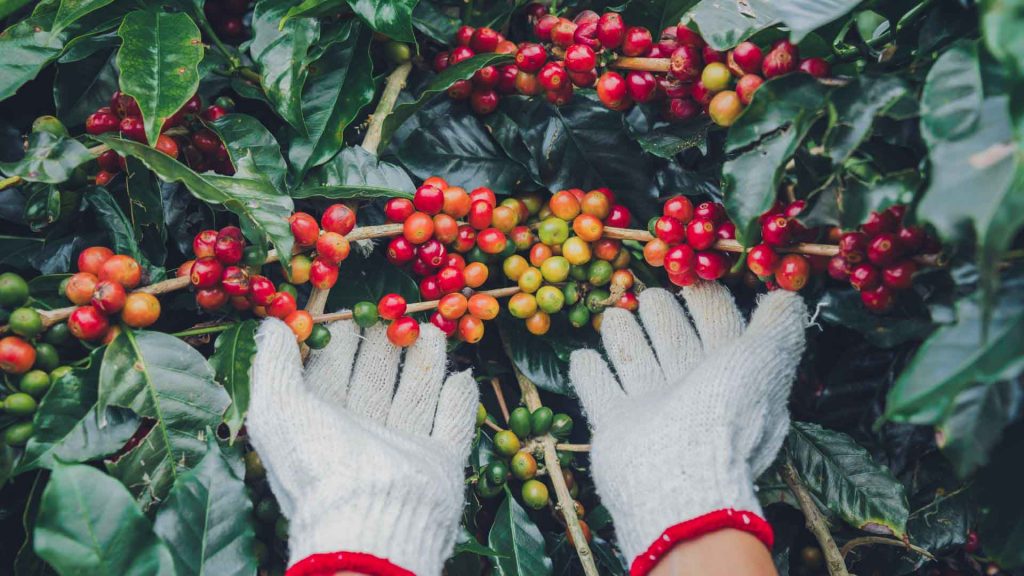
Indonesia’s coffee industry continues to make significant strides in 2026, driven by global promotion efforts, rising export opportunities, and increasing innovation across the value chain.
One of the most notable highlights comes from Indonesia’s participation in the Melbourne International Coffee Expo (MICE) 2026, one of the largest coffee exhibitions in the Asia-Pacific region. During the event, Indonesia showcased a wide range of premium coffee products, including specialty Arabica beans from Papua and innovative processing techniques developed by local producers. (Liputan6)
The exhibition also emphasized sustainability and innovation, with Indonesian participants introducing new approaches such as transforming coffee waste into eco-friendly materials for fashion and interior products. This reflects a growing trend toward a circular economy within the country’s coffee sector. (Liputan6)
In addition to international promotion, the Indonesian government is intensifying efforts to strengthen its position as a leading coffee producer. Authorities are focusing on downstream processing (hilirisasi) to increase the value of coffee products and reduce reliance on raw bean exports. (ekonomi.espos.id)
However, challenges remain. Despite strong domestic production, Indonesia still imports a significant volume of coffee to meet certain market demands, particularly for specific varieties and price segments. This imbalance highlights the need for better supply chain efficiency and stronger domestic branding. (daftarsekolah.spmb.teknokrat.ac.id)
At the same time, Indonesia’s coffee export performance continues to show positive momentum. Recent trends indicate that exports are expected to grow steadily through 2026, supported by global demand for specialty and sustainably sourced coffee. (Databoks)
Industry players are also contributing to the sector’s growth. Local coffee brands are expanding rapidly both domestically and internationally, bringing Indonesian coffee culture to a wider audience. This expansion is helping position Indonesia not only as a producer but also as a global coffee lifestyle hub.
Looking ahead, Indonesia’s coffee industry is poised for continued growth, supported by innovation, government initiatives, and increasing global recognition. With the right balance between production, processing, and branding, Indonesia has the potential to strengthen its role as a key player in the global coffee market.
C
Indonesia’s coffee industry continues to make significant strides in 2026, driven by global promotion efforts, rising export opportunities, and increasing innovation across the value chain.
One of the most notable highlights comes from Indonesia’s participation in the Melbourne International Coffee Expo (MICE) 2026, one of the largest coffee exhibitions in the Asia-Pacific region. During the event, Indonesia showcased a wide range of premium coffee products, including specialty Arabica beans from Papua and innovative processing techniques developed by local producers. (Liputan6)
The exhibition also emphasized sustainability and innovation, with Indonesian participants introducing new approaches such as transforming coffee waste into eco-friendly materials for fashion and interior products. This reflects a growing trend toward a circular economy within the country’s coffee sector. (Liputan6)
In addition to international promotion, the Indonesian government is intensifying efforts to strengthen its position as a leading coffee producer. Authorities are focusing on downstream processing (hilirisasi) to increase the value of coffee products and reduce reliance on raw bean exports. (ekonomi.espos.id)
However, challenges remain. Despite strong domestic production, Indonesia still imports a significant volume of coffee to meet certain market demands, particularly for specific varieties and price segments. This imbalance highlights the need for better supply chain efficiency and stronger domestic branding. (daftarsekolah.spmb.teknokrat.ac.id)
At the same time, Indonesia’s coffee export performance continues to show positive momentum. Recent trends indicate that exports are expected to grow steadily through 2026, supported by global demand for specialty and sustainably sourced coffee. (Databoks)
Industry players are also contributing to the sector’s growth. Local coffee brands are expanding rapidly both domestically and internationally, bringing Indonesian coffee culture to a wider audience. This expansion is helping position Indonesia not only as a producer but also as a global coffee lifestyle hub.
Looking ahead, Indonesia’s coffee industry is poised for continued growth, supported by innovation, government initiatives, and increasing global recognition. With the right balance between production, processing, and branding, Indonesia has the potential to strengthen its role as a key player in the global coffee market.
https://shorturl.fm/Ifc1Z
https://shorturl.fm/yiIZg
https://shorturl.fm/gR9K1
https://shorturl.fm/HYF0R
https://shorturl.fm/djVJz
https://shorturl.fm/MCeDN
https://shorturl.fm/BRe86
https://shorturl.fm/OVDnu
https://shorturl.fm/7pGni
https://shorturl.fm/nmaDA
https://shorturl.fm/yvYfJ
https://shorturl.fm/zPRmt
https://shorturl.fm/qk2bZ
https://shorturl.fm/bsNJY
https://shorturl.fm/fSwyN
https://shorturl.fm/PUzkH
https://shorturl.fm/qpao1
https://shorturl.fm/4P5et
https://shorturl.fm/qJ3nD
https://shorturl.fm/DU8NA
https://shorturl.fm/fKY2t
https://shorturl.fm/Zh0yw
https://shorturl.fm/WSDnc
https://shorturl.fm/WiGc4
https://shorturl.fm/OLI5T
https://shorturl.fm/17uQI
https://addlinks.pro/qfWfS
https://addlinks.pro/jJAnn
https://addlinks.pro/EbBWp